

Native Plant Knowledge Project
Indigenous Plant Use in Wisconsin

Project Overview
The Native Plant Knowledge Project started in fall 2025 and is a collaboration between Milwaukee Institute of Art & Design, and the Milwaukee Public Museum (MPM). Our goal is for this work to be as Indigenous-led and Indigenous voice focused as possible, without requiring additional or uncompensated labor from Indigenous peoples. We are a small group of mentors, educators and students, largely non-Native, working with Indigenous people and communities with the aim of creating accessible workshop packet materials for other educators and workshop facilitators on the topic of Indigenous plant use in Wisconsin. We are working to preserve this cultural knowledge for future generations and educate those who want to learn.
This project idea developed from an initial conversation between James Flores, Manager of Tribal Relations (MPM), Dawn Koceja, Community Engagement & Advocacy Officer (MPM), Nels Huse, Marketing Specialist & LEED Green Associate (Menominee Tribal Enterprises), Hj Bullard, Adjunct Professor (MIAD) and others at a conversation at MPM in Fall, 2024.
This project is also supported by the Ruth Arts + MIAD Artist Grant Program, awarded to Hj Bullard in Spring, 2025.
We are deeply grateful to Milwaukee Public Museum, Milwaukee Institute of Art & Design, Ruth Arts, and our Tribal partners, without whom this project would not be possible.
-
Our primary focus area in fall 2025 was White Corn and Black Ash, with a concentration on the Oneida Nation, WI. That concentration decision was made in order to keep this project achievable, and because James Flores is a member of our Team. James is Manager of Tribal Relations for Milwaukee Public Museum, and an enrolled member of the Oneida Nation.
-
In spring 2026 we opened our focus up to a broader range of plant species, and began to expand Native perspectives beyond the Oneida Nation. This enabled us to discuss Native Medicine Wheels and the Four Sacred Medicines, and to include Native plant species throughout Wisconsin.
Land and Water Acknowledgement
We respectfully acknowledge that the lands and waters of Milwaukee County are the ancestral and rightful homelands of the Potawatomi, Ho-Chunk, and Menominee peoples. We recognize that it is our responsibility to learn from the knowledge that is shared with us by the Indigenous nations who have cared for this land throughout generations, and we are extremely grateful for their support in the making of this document. We hope that this project can serve as a small step to building a future that honors their legacy and supports their rights to land, culture, and community.
Note on Indigenous Plant Use
Indigenous communities in America have a rich history and connection to plants and the environment. Historically and to this day, Indigenous peoples have used native plants for a vast variety of purposes. Plants may be used medicinally, as food, for arts and crafts (both functional and decorative), ceremonially, for trade, for construction, and so much more. Wooden splints may be peeled from tree trunks and woven into baskets, lichen may be used as medicine, wild rice or white corn may be grown for nutrition.
Reciprocity – giving back – is also a fundamental guiding principle running through Native American cultures, extending understandings of relationship with lands far beyond the concept of ownership and other humans and into one filled with relatives (or kin); animals, plants, elements and spirits.
Wisconsin Tribes and tribal History

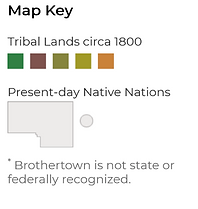
Tribal Lands Map. https://wisconsinfirstnations.org/map/ .
*Tribal territories are often contested among tribes.
There are twelve First Nations Tribes in Wisconsin: Bad River Band of Lake Superior Chippewa, Menominee Indian Tribe of Wisconsin, Brothertown Nation (still seeking federal restoration), Oneida Nation, Forest County Potawatomi, Red Cliff Band of Lake Superior Chippewa, Ho-Chunk Nation, Sokaogon Chippewa Community (Mole Lake Band), Lac Courte Orielles Band of Lake Superior Chippewa, St. Croix Chippewa Indians of Wisconsin, Lac Du Flambeau Band of Lake Superior Chippewa, and Stockbridge-Munsee Community Band of Mohican Indians.
-
Of these, only the Menominee, Potawatomi, Ho-Chunk, and Ojibwe (Chippewa) peoples were native to the region. The Brothertown, Oneida, and Stockbridge-Munsee were coerced into leaving their homelands on the east coast and were reestablished here.