

About Us
Project Coordinator/Intern

Rhianna Dye, 2025-Present
Rhianna Dye is an artist and a junior Fine Art: NSP major at the Milwaukee Institute of Art and Design. She was born and raised in central Wisconsin and feels a deep connection to the environment here. This connection manifests in her art practice, which is often sculpture-based and revolves around issues of environment, sovereignty, and reciprocity. She believes we have a lot to learn from Indigenous peoples and that their traditional knowledge must be preserved. Her favorite plant is milkweed.
Advisors
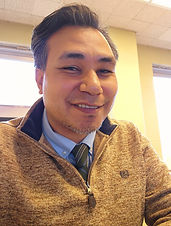
James Flores, Manager of Tribal Relations, Milwaukee Public Museum
James is an enrolled member of the Oneida Nation and supports facilitating conversations between tribal partners and MPM. His efforts help provide meaningful conversations with Indigenous people to ensure authentic representation in exhibit design and other community projects.

Hj Bullard, Adjunct Faculty, Milwaukee Institute of Art and Design
Hj Bullard is a community facilitator based in Milwaukee, Wisconsin, with a primary focus on Environments. They are a dual-citizen of the United Kingdom and the United States, with a background in Social Practice and the Arts. They hold a PhD in Interdisciplinary Arts and Science, with certificates in Environmental History and the History of Science. They grew up in England where they developed a deep connection with the landscape, and moved to the US in 2011 for grad school. They are genderqueer, neurodivergent, and love wildswimming.
Intern
Ainzley Brown, 2025
Ainzley Brown is a sophomore at Milwaukee Institute of Art and Design majoring in Product Design. She grew up in central Illinois and moved to Milwaukee, Wisconsin, for college. Her design practice is focused on sustainable, environmentally conscious products that are still affordable for everyday people. The environmental aspect of the project and opportunity to learn more about Indigenous people in the area and preserve their cultural knowledge led to her involvement in it. She has great interest in using traditional knowledge in combination with new and contemporary knowledge to do as much as we can to sustain our environment which sustains us.
Alison DeNamur, 2026
Alison DeNamur is a graduate student at the University of Wisconsin Milwaukee, working toward her master's in Library and Information Science. She grew up in Northern Wisconsin and moved to Milwaukee, Wisconsin, for grad school. Alison designed the website following Rhianna, James, HJ, and Ainzley's research.
A Note on Rhianna's Experience
Nature has always been a part of my life, growing up as I did in the woods of Wisconsin and gardening with my mom. Moving to the city only gave me a renewed appreciation for the nature I was no longer able to reliably access, and my art practice began to revolve more and more around the natural world. I began to think about our relationship to Mother Earth and how we might better structure our society to sustain the land that gives us life. Reading Braiding Sweetgrass by Robin Wall Kimmerer was my first exposure to traditional indigenous worldviews and ways of being. That book and the knowledge within it resonated with me and began to influence not just my art practice but the way I live my life. The summer before I was asked to work on this project, I began volunteering at the Native Wellness Garden near me, where they still practice some traditional foodways, such as growing the four sacred medicines and a Three Sisters Garden. This became a place of community and connection for me, as well as a place where Indigenous knowledge was actively being used, rediscovered, and shared. So when I was presented with the opportunity to collaborate on this project, I immediately recognized the importance of the work and felt honored to play a part in helping preserve Indigenous plant knowledge in Wisconsin. It was only natural.
The project itself has been an incredible learning experience and I am so grateful to have had the privilege of collaborating with the Indigenous communities of Wisconsin. Through this project, we strove to break the pattern of extraction that has historically occurred when non-Native people have sought out Native knowledge, a pattern that left Native people without compensation for their expertise nor control over how that information was used. Instead, we have focused on taking the time to build relationships that are mutually beneficial and trustworthy, that bridge gaps between cultures and communities. The communities we have worked with have been generous enough to give us grace on this journey and correct us when we stumble. We owe an infinite thanks to everyone who took time out of their busy schedules to collaborate on this project and share their knowledge with us. I am honored to be part of a project that recognizes how understanding, preserving, and restoring Indigenous knowledge benefits us all.